Burlington-based writer covering Vermont's cannabis industry since 2023. Visits every licensed dispensary in the state, tests products, and reads the CCB rulebook so you don't have to.
Vermont has roughly 153 frost-free days per year. That is not a lot of time to grow anything — tomatoes, corn, or cannabis. The state's compressed agricultural calendar, which runs from late May to early October in the Champlain Valley and even shorter at elevation, imposes a discipline on the cannabis supply chain that you don't encounter in a place like California or Colorado. There is no year-round outdoor production here. There is a season, and then there isn't, and the local retail market reflects that rhythm in ways worth understanding if you shop at Vermont dispensaries with any regularity.
What "harvest season" actually means for retail shelves
Most of the cannabis sold in Vermont year-round comes from licensed indoor cultivation — tightly controlled environments that produce consistent flower on a rolling basis regardless of what the weather outside is doing. Indoor grows are the backbone of supply stability, and they're why you can walk into Float On in January and find a decent selection.
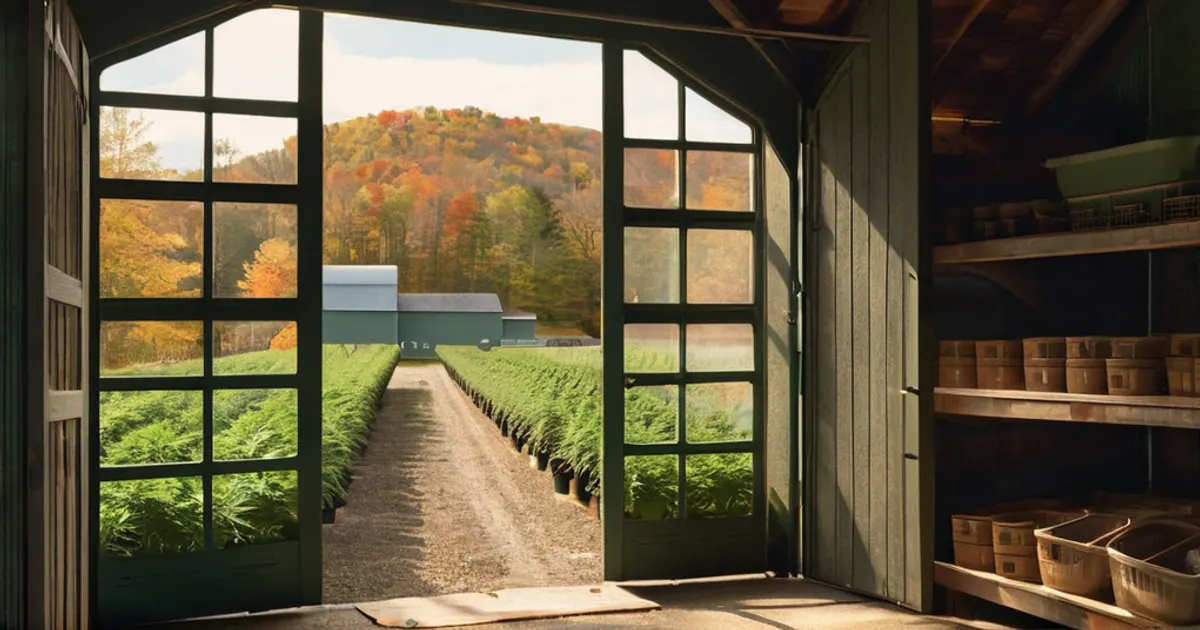
But outdoor and light-dep greenhouse cultivation is a different story. Vermont's licensed outdoor growers plant in late spring, canopy through summer, and harvest in September and October. That material — often priced more accessibly and sometimes yielding considerably larger quantities of biomass per acre than indoor — enters the wholesale market in a concentrated burst. By late October and into November, the ripple effect hits retail menus in Burlington, Winooski, and points north.
What you'll notice as a shopper: more variety at the lower price tiers, occasional appearances of strains you haven't seen before, and sometimes a loosening of the chronic "menu looks the same every week" feeling that plagues smaller markets. Dispensaries that have relationships with local craft outdoor cultivators — a category the Vermont Cannabis Control Board has actively encouraged through its microbusiness and tier-one licensing structure — are particularly likely to show seasonal variation.
The CCB's craft-forward framework and why it matters here
Vermont's regulatory architecture was designed, at least in part, to prevent the market from immediately consolidating into a handful of vertically integrated giants. The CCB's tiered cultivation licensing, with relatively modest canopy caps at the lower tiers, created space for small farmers to enter the market without needing to compete on industrial scale. The tradeoff is that small outdoor farms produce smaller, more variable harvests — which is part of why the fall window feels like a genuine event rather than a routine restocking.
The CCB publishes market reports and licensee data that paint a picture of a market still maturing, with cultivation capacity growing year over year. As more licensed outdoor and greenhouse operations reach full production, the harvest pulse should grow more pronounced — more flower, more diverse genetics, more price competition at the outdoor tier — not less.
How menus shift in practice
Not every dispensary broadcasts its seasonal sourcing the way a farm-to-table restaurant might announce the first local tomatoes. But there are patterns worth watching.
In the weeks after harvest, wholesale brokers and direct farm relationships tend to push new lots into the market. Dispensaries restocking flower at this time may rotate in strains they haven't carried since the previous fall, or introduce genetics from a cultivar they haven't stocked before. Concentrates and pre-rolls made from outdoor material — which can be excellent when the grow is well-managed and the cure is given time — also start appearing. If you use the strain match tool and nothing currently in stock fits what you're after, it's worth checking back during this window.
Pricing dynamics shift too. Outdoor flower wholesale costs are generally lower than comparable indoor, and while margins vary by retailer, the harvest glut typically creates some downward pressure on entry-level eighths. It's not a fire sale, but if you've been eyeing the deals page and waiting for a moment to stock up, October and November historically offer more options than August does.
For dispensaries in communities like Winooski, Essex Junction, and Milton that draw from both local farms and wholesale distributors, the harvest season also represents an opportunity to strengthen regional sourcing stories — something that matters more to certain customer segments than others, but that matters increasingly as Vermont's cannabis identity matures.
What to do with this information
A few practical takeaways for the attentive shopper:
- Check menus more frequently in October. New lots rotate faster during harvest season. A menu that looked thin in September can look meaningfully different two weeks later.
- Ask about origin. Budtenders at shops like Zenbarn Farms, Herbmont, and Lake Effect Cannabis are generally happy to discuss whether a product came from an in-state outdoor grow versus indoor or out-of-state sourcing. The answer shapes the product's story, and sometimes its quality characteristics.
- Don't sleep on concentrates. Hash rosin and live resin made from fresh-frozen harvest material starts appearing in the November–December window. Vermont's cold climate is actually conducive to quality fresh-freeze logistics in ways warmer states aren't.
- Plan a crawl. Harvest season is a genuinely good time for a dispensary crawl — the variety across shops peaks, and the cooler weather makes the driving more pleasant.
The deeper argument for paying attention to seasonality
There's a broader case here that goes beyond bargain-hunting. Vermont built its cannabis market with at least rhetorical commitment to the idea that cannabis could be a craft agricultural product — something with provenance and place, not just a commodity in a childproof bag. Whether that aspiration fully materializes will depend on how the market develops over the next several years, but the harvest season is where you can actually observe the gap (or the alignment) between the promise and the reality.
When a small outdoor farm in Addison County puts something genuinely excellent on the shelf — and some do — that's a Vermont agricultural story as much as it's a cannabis story. The weather-strain pairing tool exists partly for this reason: fall weather and fall harvest flower are not unrelated phenomena. The terpene profiles that develop in a plant finishing outdoors in Vermont's crisp September air are different from what an indoor clone expresses under LEDs in February.
Whether you find that compelling or prefer the consistency of controlled indoor production is a matter of taste. But knowing that the seasonal window exists — and roughly when it opens — makes you a more informed shopper in a market that rewards paying attention.
Find a Vermont Dispensary
Browse all licensed cannabis dispensaries in Burlington and Vermont.
View Dispensary Directory →Keep reading
All posts →- Industry
Inside Vermont's craft cannabis scene: who's growing your flower
Vermont's cannabis supply chain is younger than most people assume. Here's how cultivation actually works in the state — and why the scale stays small on purpose.
6 min readJuly 5, 2026 - Industry
Inside Vermont's craft cannabis scene: who's growing your flower
Vermont built its cannabis market with small cultivators in mind. Here's what that actually means for the flower on the shelf — and how to tell craft from commodity.
6 min readJune 27, 2026 - Education
Fall harvest season: what "fresh drop" actually means on a menu
Every October, Vermont menus start lighting up with "fresh drop" labels. Here's what that phrase actually signals — and what it doesn't.
6 min readSeptember 22, 2026